
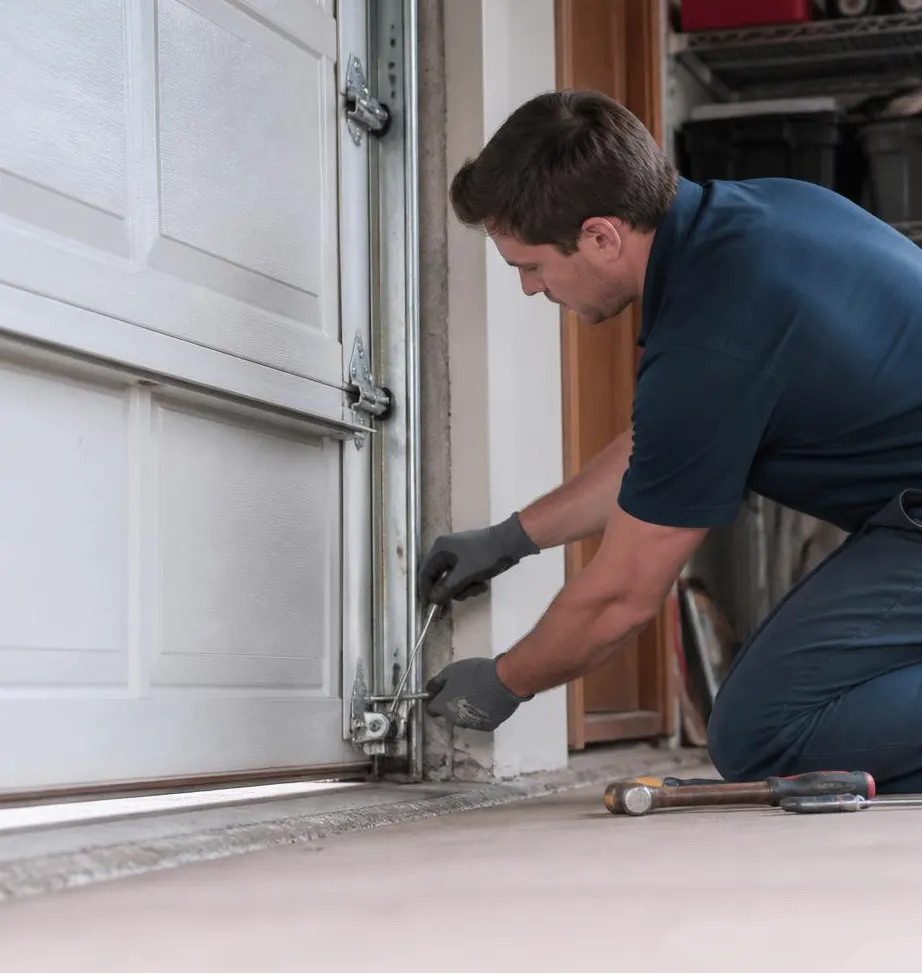
What a Technician Sees on a Typical Safety Call
Most calls about kids and pets near the garage door start the same way: something scared the homeowner. A dog ducked under the door as it was closing and it kept coming down. A toddler grabbed a remote off the kitchen counter and triggered the opener while someone was standing in the doorway. A spring let go with a loud bang while kids were riding bikes in the driveway. By the time we arrive, nobody got hurt—but the near-miss is what prompts the call, and what we usually find underneath it is a door that was never actually testing itself the way it should.
The most common culprit after the dry months here is a pair of photo-eye sensors coated in fine dust, pollen, or the haze that settles after a smoky stretch of air. Those sensors sit a few inches off the ground on either side of the track, and they're the reason a modern opener reverses when something—or someone—is in the door's path. When the lenses are dirty or the brackets got nudged out of alignment (often from a bike, a trash can, or a car bumper), the beam either doesn't fire or doesn't line up, and the safety reversal simply doesn't happen.
How Bad It Actually Gets
Garage doors are heavy—most residential sections run well over a hundred pounds total, and a torsion spring under full tension is moving that weight at real speed. When the auto-reverse feature fails, the result isn't a gentle bump. It's enough force to cause a crush injury to a small hand or paw, or to pin a child who's reaching for a dropped toy. Older panel designs, especially ones without pinch-resistant joints, can also catch fingers between sections as the door travels up or down—this is a separate issue from the sensors and just as common in homes with doors installed before pinch-resistant designs became standard.
Springs are the other serious risk. A spring that's rusted, visibly stretched, or has gaps between the coils is close to failing, and when it does, it can let the door drop suddenly or send the opener's travel limits off. This is not a DIY fix: torsion springs store enough energy to cause severe injury, which is exactly why professional replacement exists as its own service rather than something handled with a ladder and a wrench on a Saturday.
The Checks That Actually Prevent an Incident
- Run the paper towel test monthly. Set a full roll of paper towels where the door closes. Trigger the close cycle. The door should reverse the instant it touches the roll. If it doesn't, stop using the opener until it's inspected—this is not a wait-and-see issue.
- Wave a hand through the sensor beam while the door is closing. It should reverse immediately. If the door closes anyway, or if the little indicator lights on the sensors are blinking instead of solid, the beam isn't aligned and needs to be fixed before the door is used around kids or pets again.
- Wipe the sensor lenses down regularly, especially after dusty, windy days or stretches of wildfire smoke, which leave a film that blocks the beam even when the sensors are physically aligned.
- Keep remotes and keypads out of reach. Small children find remotes fast. A wall-mounted PIN keypad set well above a toddler's reach, or disabling the external keypad entirely for very young households, removes the temptation.
- Check the bottom seal before winter rain season. A worn or gapped bottom seal doesn't just let water and dust in—it also leaves enough of a gap for a small pet to try to squeeze under a closing door. Replace it if it's cracked, flattened, or pulling away from the panel.
- Inspect the panel edges and hinge points for pinch hazards, especially on older doors. Finger guards or pinch-resistant panel upgrades are worth it if there are young kids or curious pets in the house.
- Look at the springs without touching them. Rust, visible gaps between coils, or a door that feels heavier or jerkier than usual are signs a spring is near the end of its life.
- Make it a household rule, not just a mechanical fix: no standing, playing, or parking bikes under a moving door, and no treating the remote as a toy.
Why This Matters More Right Now
Heading out of the dry season and into winter rain, sensor lenses tend to be at their dirtiest from months of accumulated dust, and bottom seals that got brittle in the heat are about to be tested by actual weather. It's a good window to run through this list before the rain starts and before the door gets used more often with doors and windows closed up.
When to Call Chino Garage Door Co
If the paper towel test fails, if the sensor lights won't hold steady after cleaning and adjusting, or if you're seeing any of the spring wear signs above, it's time to call rather than keep testing it yourself. Our Garage Door Opener Repair & Installation service covers sensor alignment, reversal calibration, and keypad setup so remotes and codes stay secure around kids. If springs are the issue, our Spring Replacement service handles the high-tension work safely, with the correct spring size and tension for your door rather than a generic swap. Either way, we'll test the full safety cycle before we leave, not just the part that was reported broken.
If it's been a while since your garage door's safety features were checked, or you want peace of mind before the rainy season settles in, call Chino Garage Door Co today—we serve homes and businesses throughout Chino, CA and the surrounding area.