
The Short Answer
In most rental situations, the landlord covers mechanical failures and normal wear — a dying spring, a worn-out opener, a panel that's rusting from the inside out. The tenant covers damage they cause and day-to-day upkeep — dead remote batteries, a door knocked off track by a moving truck, or debris left to jam the sensors. That's the general rule of thumb landlords and tenants follow, though your actual lease is what settles any dispute, so read it before you argue about it.
What's Usually on the Landlord
- Springs: Torsion and extension springs wear out from age and cycle count, not from anything a tenant did. A snapped spring is a landlord repair.
- Opener failure: Motors, circuit boards, and worn gears fail from age and use. This is standard mechanical wear.
- Structural issues: Rusting bottom panels, failing rollers, or a track pulling away from the frame typically falls under the landlord's duty to maintain a safe, working unit.
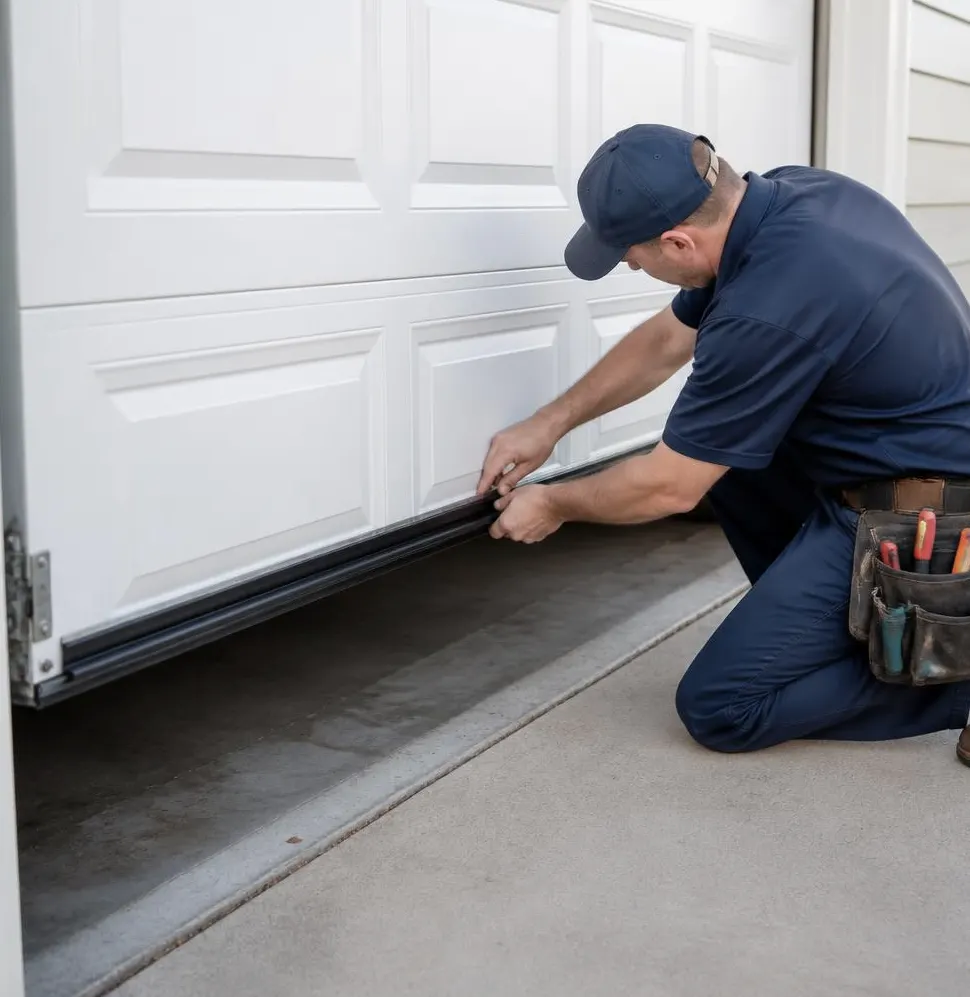
- Weatherstripping breakdown: Inland sun and dry heat crack and shrink the rubber seal at the bottom of the door over a season or two. That's ordinary wear, not tenant damage.
- Pre-existing safety gaps: If the opener lacks working auto-reverse or photo-eye sensors, that's a landlord responsibility to fix, not something a tenant should patch themselves.
What's Usually on the Tenant
- Batteries and remotes: Replacing dead batteries in the wall console or remote is routine upkeep, same as a smoke detector.
- Keeping the track clear: Dust and debris from dry-season winds build up in the tracks. Wiping them down occasionally is basic care, not a repair.
- Damage from use: Backing into the door, overloading an opener with a too-heavy insulated panel it wasn't rated for, or forcing a door that's stuck — that's tenant-caused and usually tenant-paid.
- Reporting problems promptly: If a tenant hears grinding or sees the door sagging and says nothing for months, a landlord can reasonably argue the delay made things worse — and that gray area often shifts cost back to the tenant.
The Move-In Checklist That Prevents the Argument
Do this together, before either of you signs anything, and take photos with a timestamp.
- Test the auto-reverse. Place a 2x4 flat on the ground where the door closes. It should reverse on contact. If it doesn't, flag it in writing before move-in.
- Check the springs. Look for visible gaps in the coil or rust streaks running down the spring — early signs of fatigue.
- Inspect the weatherstripping. Cracked, brittle, or torn seals at the bottom let in dust now and rain later; note the condition.
- Listen for noise. Open and close the door by hand with power off. Grinding, popping, or scraping should be documented, not discovered later.
- Check the slab and frame. Older homes may show hairline cracks near the door opening from ground settling; note any gaps so they're not blamed on you later.
- Confirm the manual release works. This matters if the power ever goes out during a storm.
- Photograph panel condition. Dents, rust spots, or sun-faded paint should be on record before you're accused of causing it.
Email this checklist and the photos to your landlord or property manager the same day. A dated paper trail is worth more than memory when a dispute comes up six months later.
When to Call Chino Garage Door Co
If the move-in inspection turns up a spring that looks fatigued, an opener that's not reversing properly, or weatherstripping that's cracked from sun exposure, get it assessed before move-in day rather than after. We handle spring replacement and garage door opener repair for landlords and tenants across Chino, and we'll give you a written diagnosis you can hand to whoever's paying the bill. Having a clear, dated inspection report from a technician settles more disputes than any text message argument ever will.
If you're moving into a rental in Chino, Chino Hills, or anywhere nearby and want a second set of eyes on the garage door before you sign, call Chino Garage Door Co and we'll walk through it with you.